
Off the gas for good



Show 0 more photos Show 6 more photos Hide additional photos
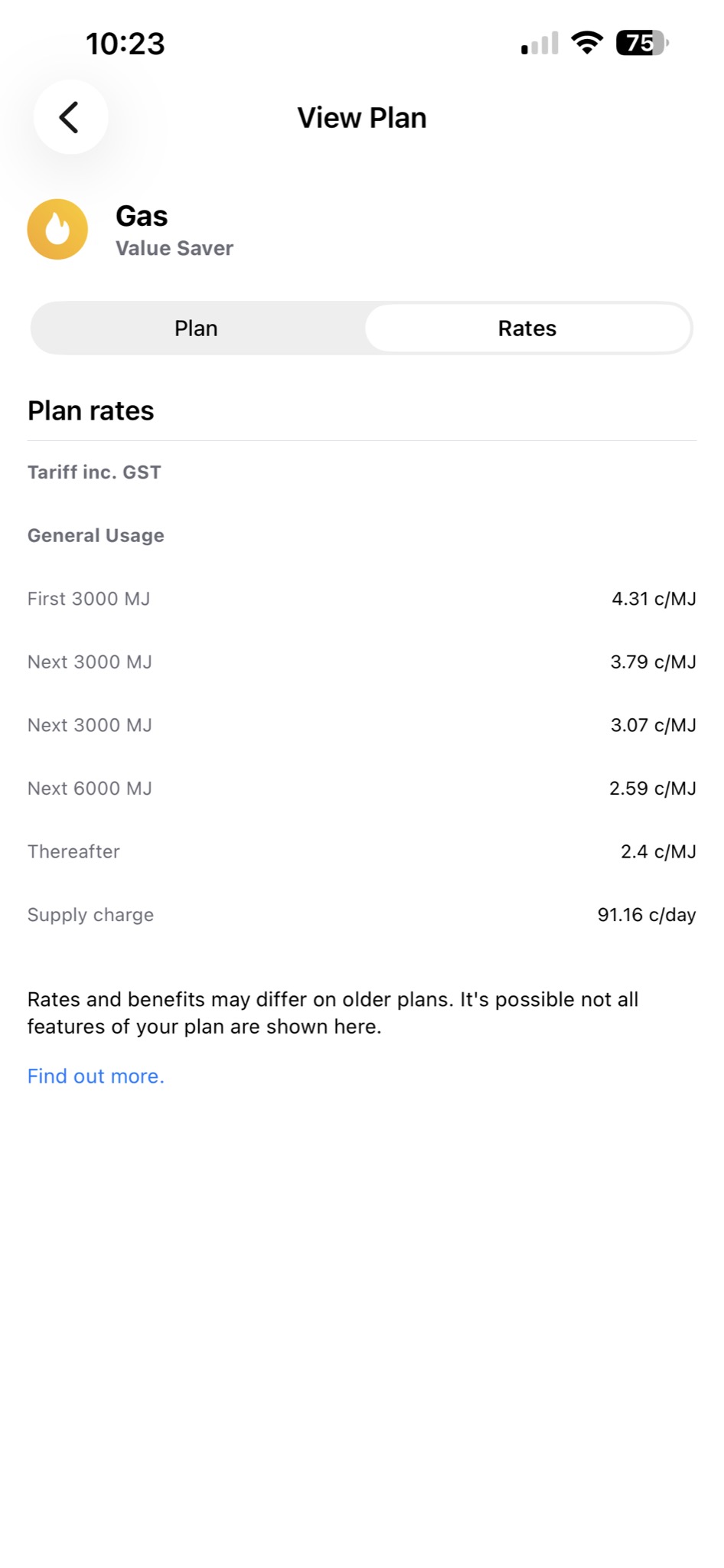

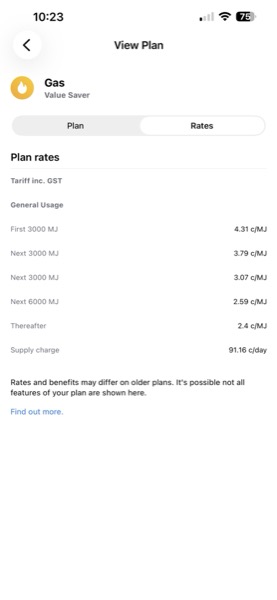
Our gas supply charge was 91.16 cents a day. That is $333 a year for the pipe itself, before burning a single megajoule — and with the cooktop gone, we were burning none.
Then there's the gas itself, billed by the megajoule — a unit nobody actually thinks in. So here's roughly what it meant in practice. Back-of-envelope figures, not gospel.
One thing to get straight first, because it shapes every number below: most of the year, electricity costs us nothing. It comes off our own roof, either used as it's generated or stored in the batteries and spent after dark. We only buy from the grid when the sun hasn't kept up — mostly in winter — and even then the batteries charge during the cheap, renewable-heavy part of the day and release it through the expensive evening peak. That averages out around 10c per kilowatt-hour. So read the electricity figures below as the worst case, not the usual one.
Boiling a litre of water. On the gas burner, about 3.6 cents' worth, because roughly 60% of the flame heats the kitchen rather than the pot. On induction, closer to 1 cent at that worst-case rate — and nothing at all the rest of the time.
A tank of hot water. Three hundred litres up to 60°C needs about 16 kilowatt-hours of real heat. On our old instant gas that was roughly $2.85 a tankful. The heat pump does the same job for about 50 cents at worst, and free whenever the sun is doing the work.
Heating a room. This is where it separates. A gas heater turns one unit of gas into slightly less than one unit of warmth. A heat pump doesn't make heat, it moves it, delivering three to four units for every one it draws. Same warmth, roughly 19 cents an hour on gas against about 3 cents on the heat pump — and nothing at all on a sunny day.
Gas lost on every one of those, and it lost worst on heating, which is where the volume was. But the number nobody escapes is the last one: 91 cents a day, payable whether we burned anything or not. Electricity carries a daily supply charge too, and ours is much the same — the difference is that we were always going to pay that one. Going fully off-grid is a real choice, and some people make it, but it wasn't ours. So the gas charge was the second connection, for a service we had stopped using.
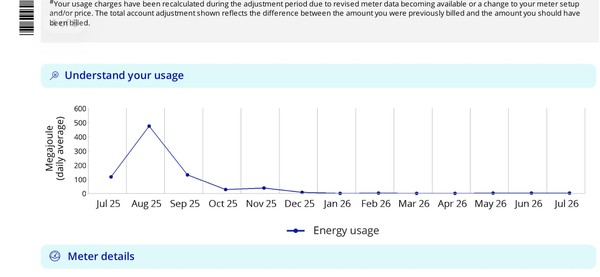
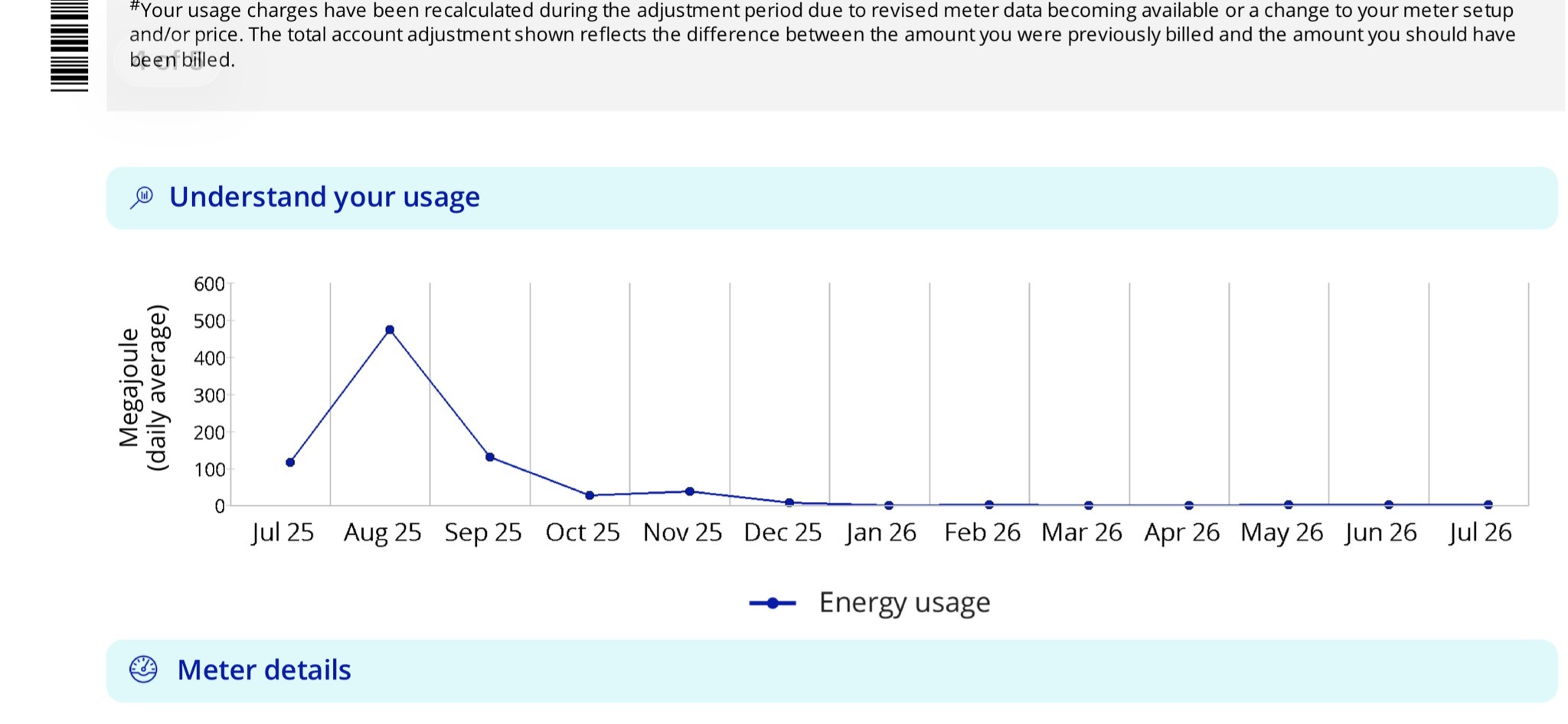
And the carbon. Reading AGL's own usage chart, a full year on gas ran us somewhere around 45 gigajoules. Australia's national greenhouse accounts put burning natural gas at 51.5 kg of CO₂ per gigajoule, so call it two and a third tonnes a year — roughly what you'd get from putting a thousand litres of petrol through a car. We gave up buying petrol years ago and felt quietly pleased with ourselves, while piping the equivalent into the kitchen, the bathroom and the ducts the entire time. As of last week that number is zero.
In our last winter on gas, with the ducted heating, the hot water and the cooktop all running on it, the bill peaked at $528 in a single month.
"But what about blackouts?" This is the objection every time, and I understand it — a gas flame feels like the thing that keeps working when the power doesn't. Except ours didn't. Our gas hot water needed electricity to ignite and control it. The ducted heating needed electricity for its fan and controller. The cooktop needed electricity for the spark. In a blackout all three were dead weight. In theory we could have held a match to a burner and coaxed the stovetop into life, though we never once tried it.
Meanwhile the induction cooker now sits on the backed-up side of our Tesla Gateway, with three Powerwalls behind it. We've had outages of up to nine days since we moved here. Next time, as far as I can work out, ours will be one of two houses in the street that can still heat its air, its food and its water — the other one recently got a battery. The rest have gas, and no way to run it.
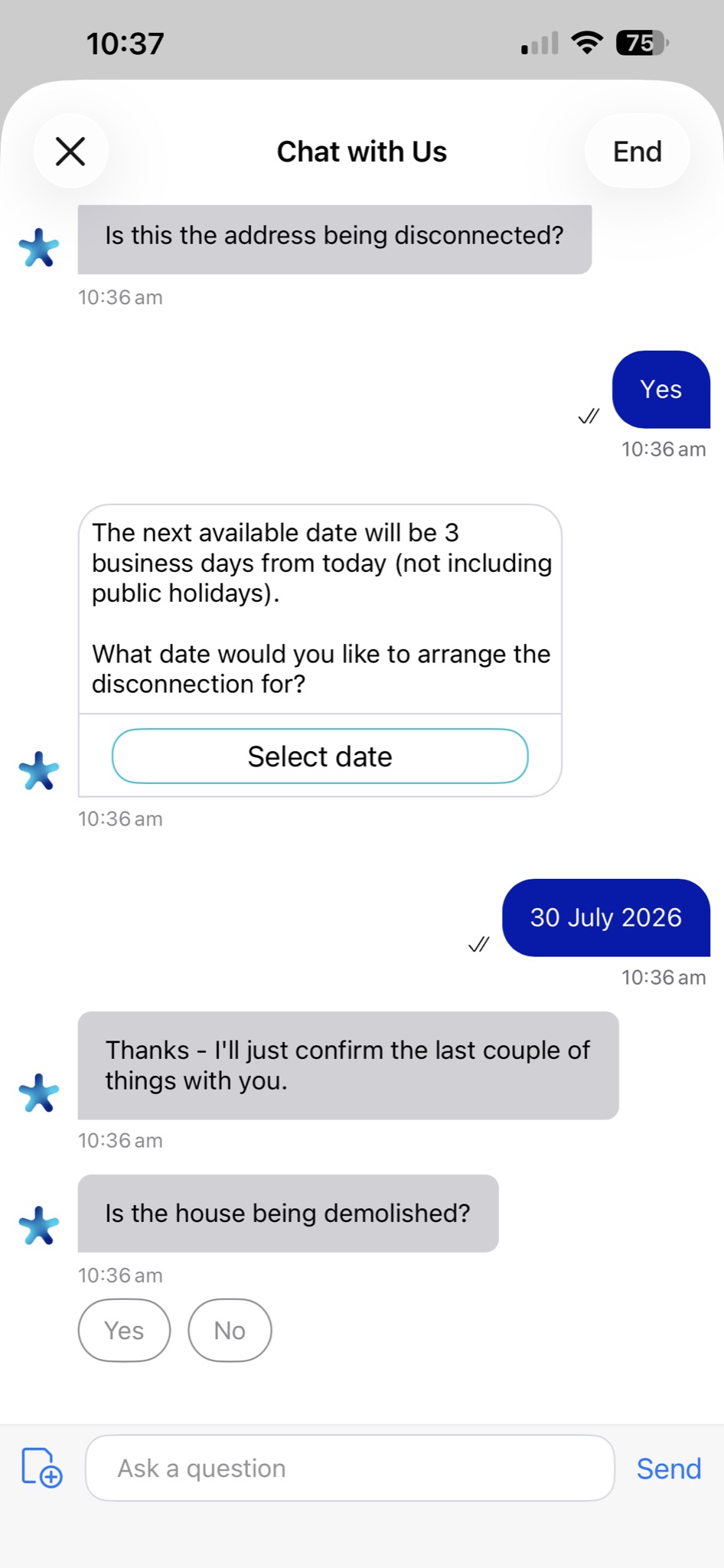
So on the afternoon the induction cooker went in, I opened the AGL app and asked them to disconnect us.
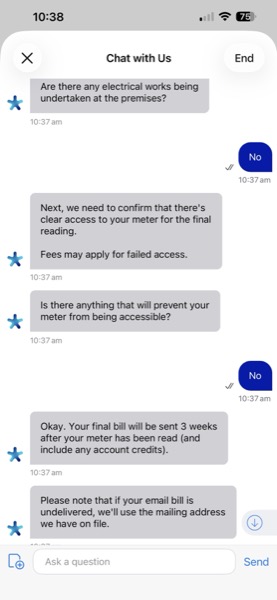
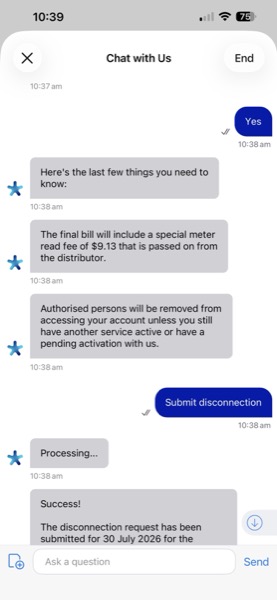
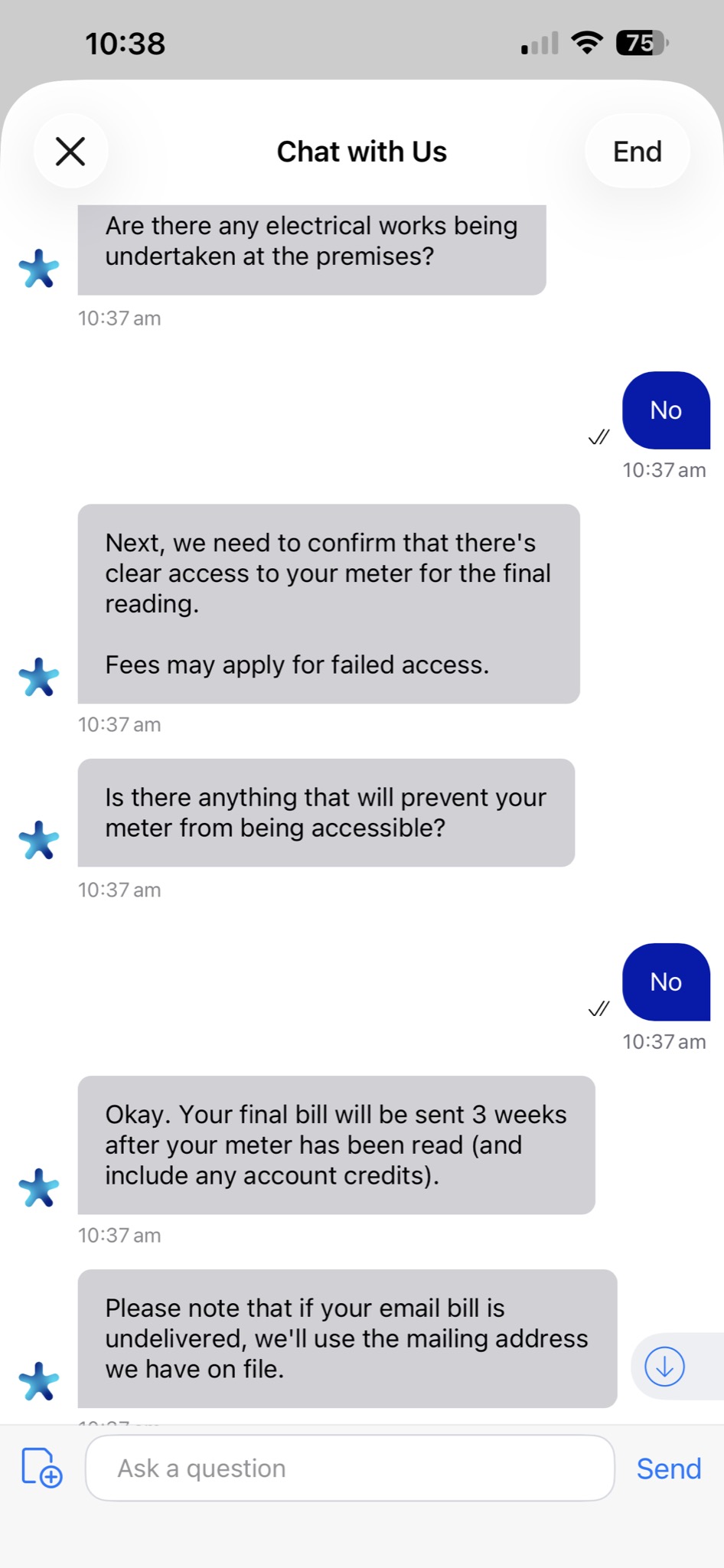
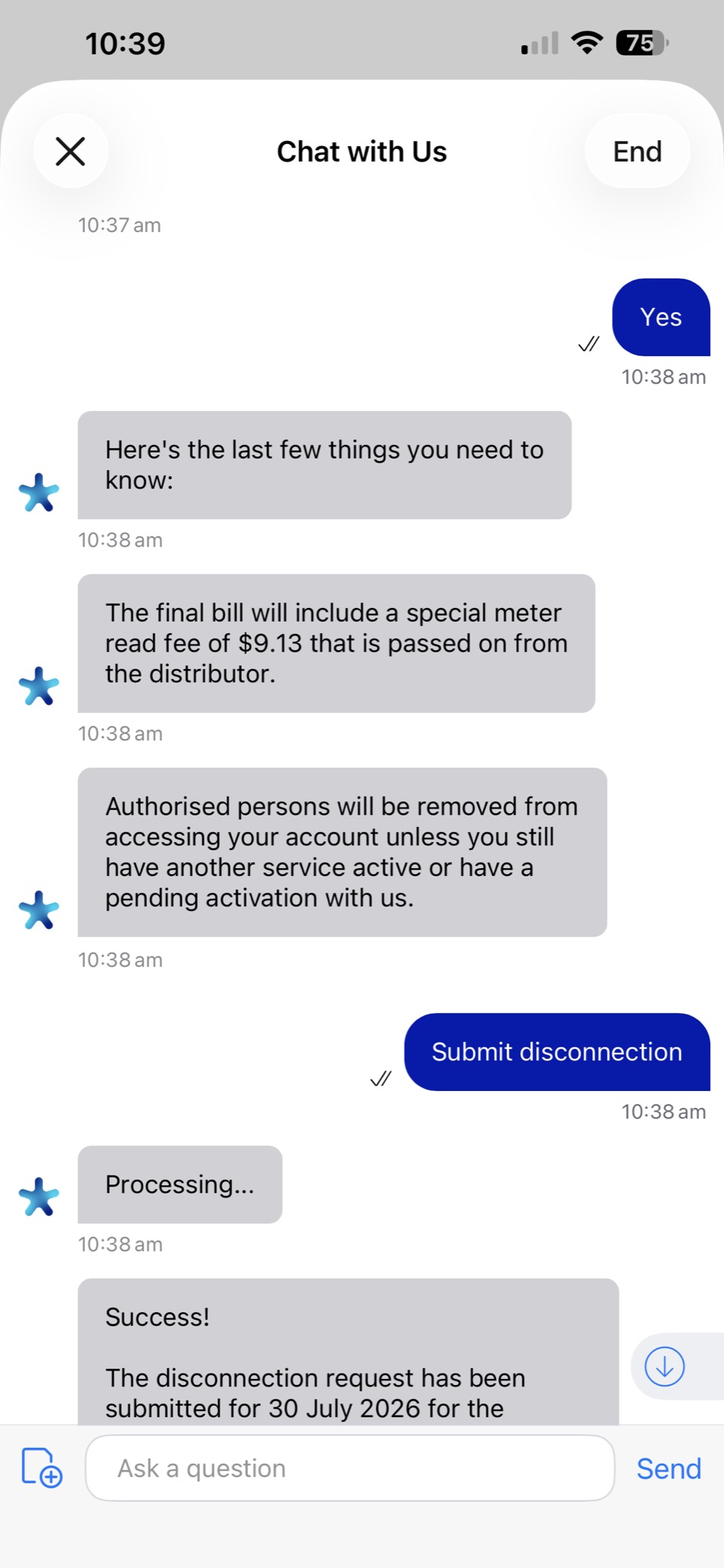
It's a chatbot, and to be fair it was efficient. It confirmed the address, offered the next available date — three business days out — then wanted to know whether anything would block access to the meter for a final reading, warned me that a special meter read fee of $9.13 would be passed through from the distributor, and explained that the final bill arrives about three weeks after the read. I pressed Submit. Disconnection requested for 30 July 2026.
Here's the part I hadn't understood until I went looking.
Disconnection is not removal. Our distributor, Multinet, defines it as "the temporary closure of a gas connection". The supply is shut off, the account closes, the charges stop — but the meter stays bolted to the wall and the service pipe stays in the ground, quietly available.
Taking it out altogether is a separate request called abolishment. It goes to the distributor rather than the retailer, and only once there's no active account, so it can't even be asked for until the disconnection is done. It costs around $268 — a fee the regulator capped earlier this month, so it's cheaper now than it has been.
There is no money in it. Once the account closes the supply charge stops either way, so abolishment buys exactly one thing: permanence. No meter on the wall, no pipe under the garden, and no possibility of any of it quietly coming back.
We won't be doing it. Once the account is closed the meter costs us nothing, and $268 to remove a pipe that is already dead buys nothing but tidiness. It can sit there in the ivy.
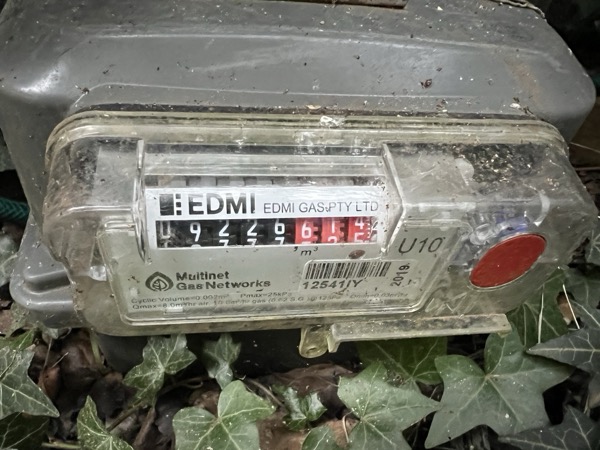
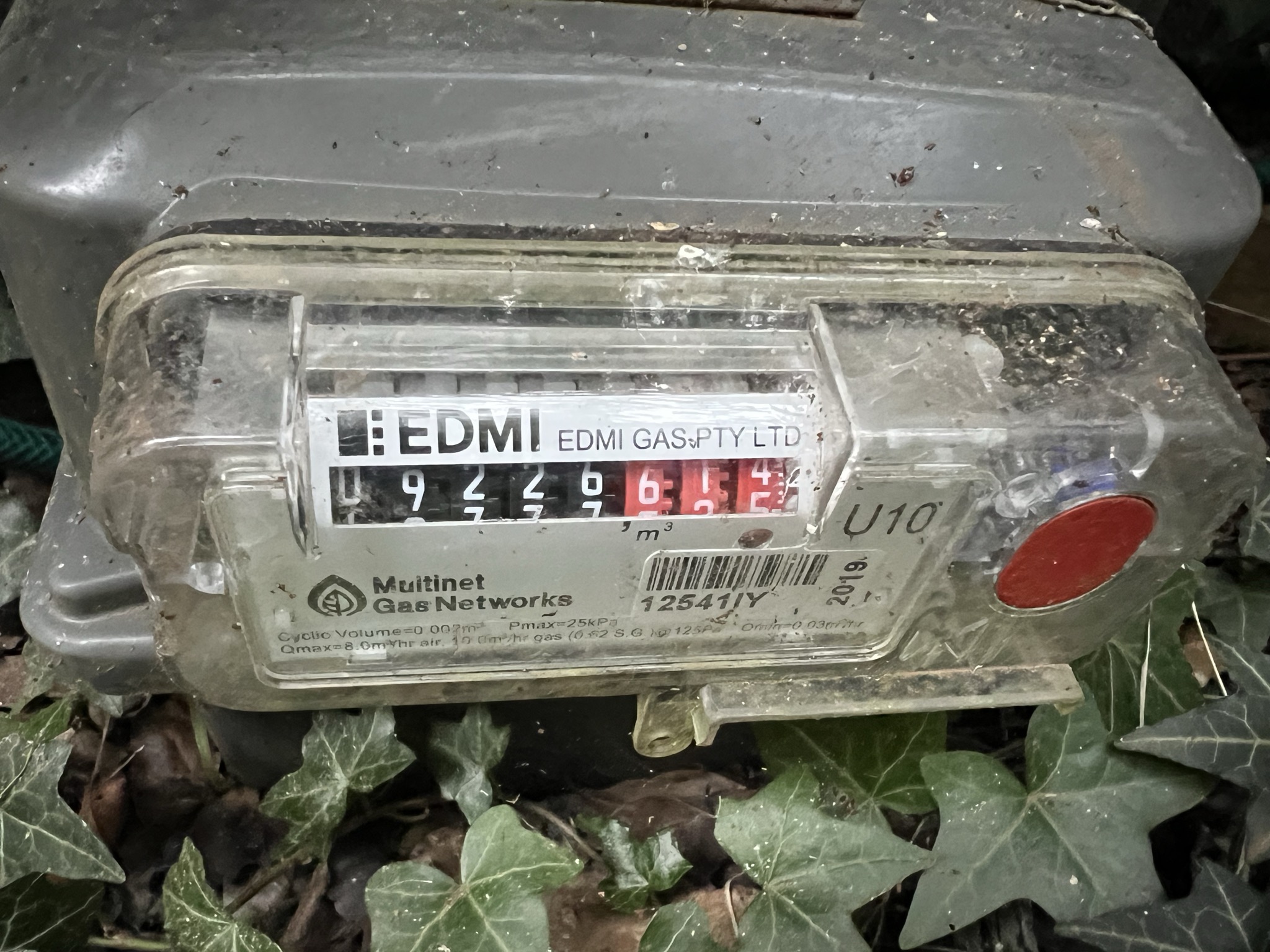
This morning a man in a hi-vis vest walked up across our lawn, read the meter, and left. The final figure was 9226.614 — precisely what I had photographed on Monday afternoon, the moment the cooktop came off. Four more days connected to the gas network, and not one megajoule through it.
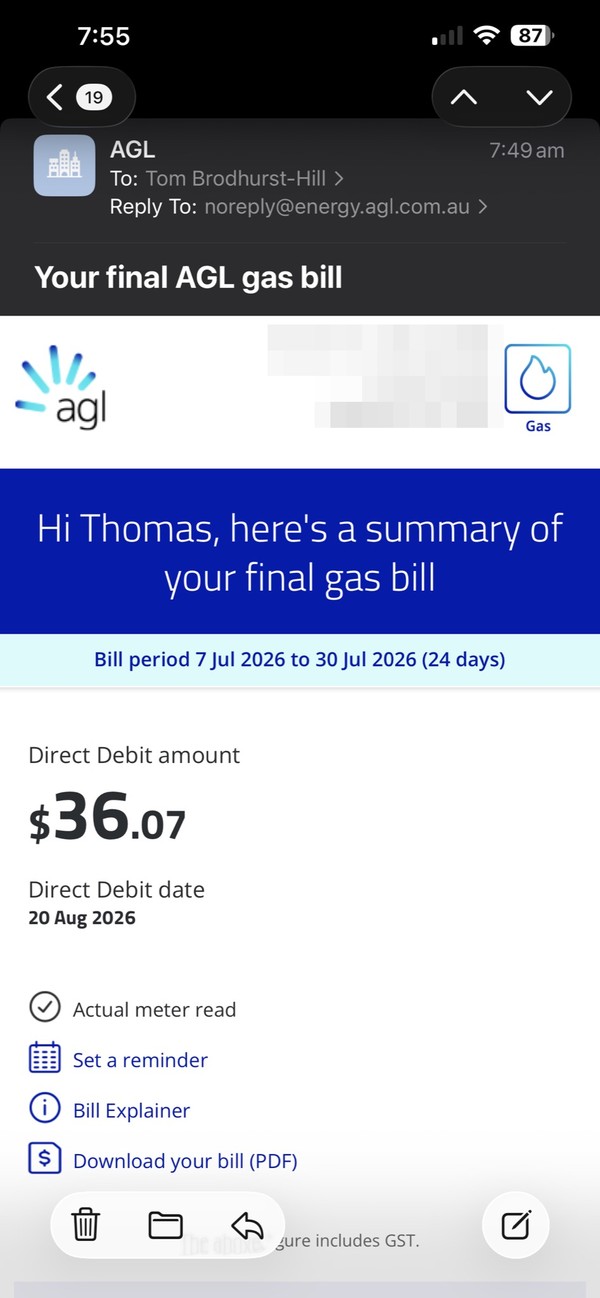
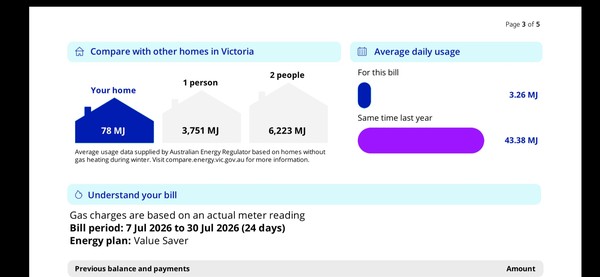
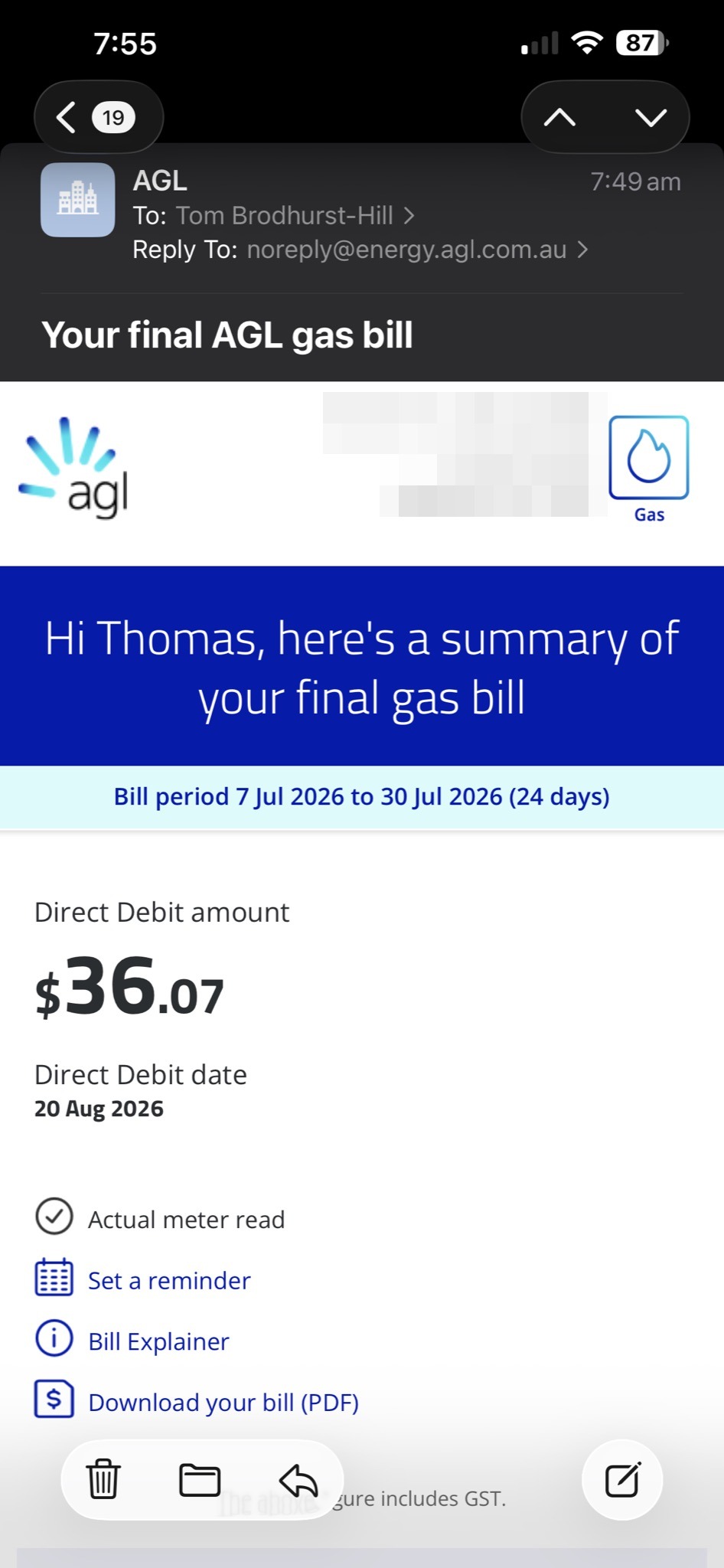
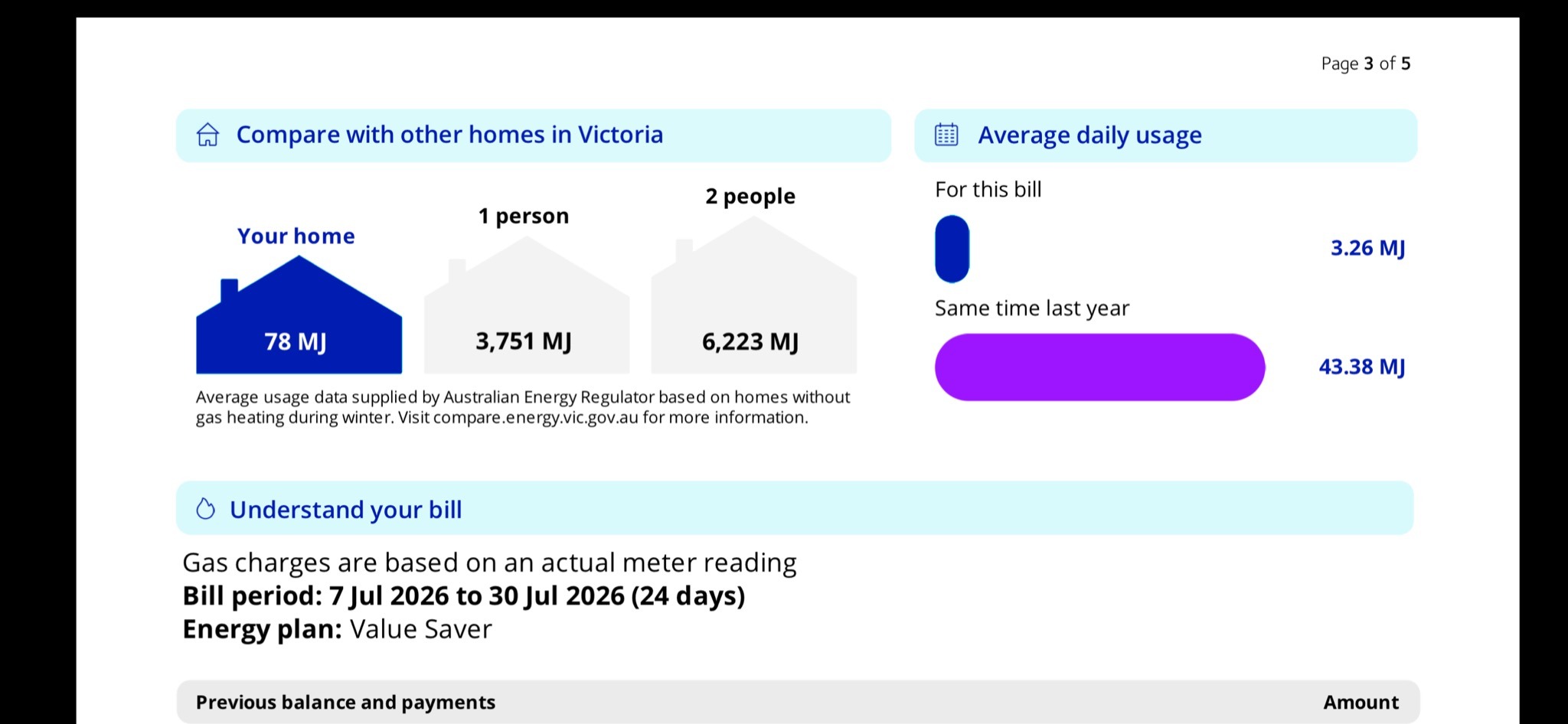
Two days later the final bill arrived and settled everything. $36.07, payable 20 August, and stamped actual meter read rather than the estimates we'd been billed on for months. Seventy-eight megajoules across 24 days: 3.26 MJ a day, against 43.38 MJ for the same weeks last year. At the peak, last August, we were burning around 480 MJ a day. The thirteen-month graph on the back of it falls off a cliff — a winter peak near 480 megajoules a day in August 2025, then heating gone, then hot water gone, then a flat line along the bottom.
Three years of taking gas out of this house one appliance at a time — the ducted heating, then the hot water, and finally the cooktop — and it ends with a chatbot, a $9.13 meter reading fee, and a stranger walking back across the grass.
Related Posts
- The installation that made the gas redundant Installing our induction stove 27 Jul 2026
- The rebate that needed the gas connection to still exist Rebate for replacing our gas stove 28 Jul 2026
- Earlier — getting gas out of our heating Goodbye gas — disconnecting the ducted heating 4 Feb 2026
- Earlier — the heat pump that replaced gas hot water Heat pump installation 3 Dec 2025
- Where it started — the oven, bought in March Oven bought in March, arrived in July 12 Jul 2026
- What the circuit cost Quotes to install an oven and induction cooktop 20 Jul 2026
- The switchboard it joined Where does this circuit go? 26 Jul 2026
Report
Report
Report
Report
Report
Report