
The 100 W parasitic rumour, checked
Show 0 more photos Show 2 more photos Hide additional photos
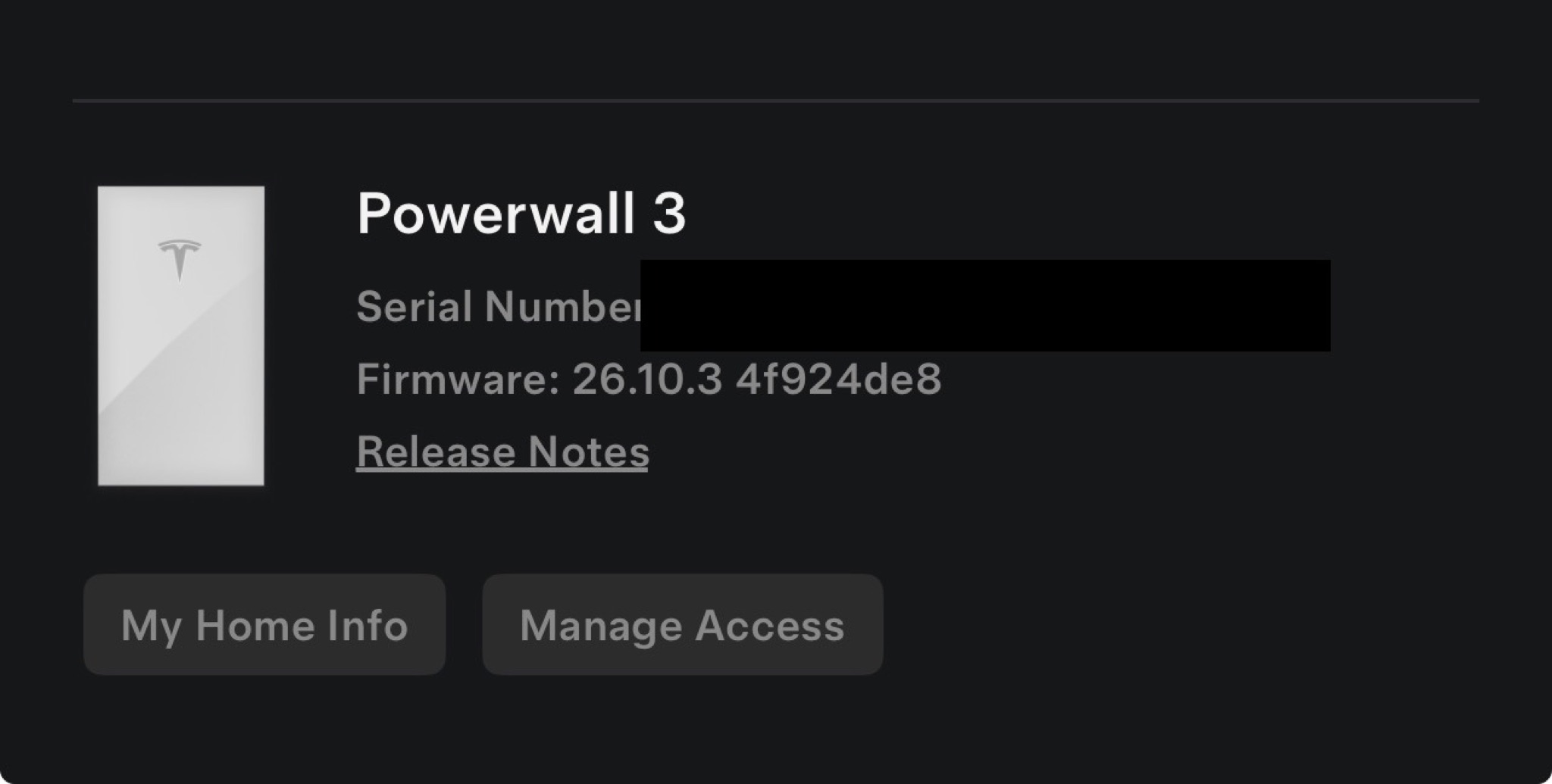
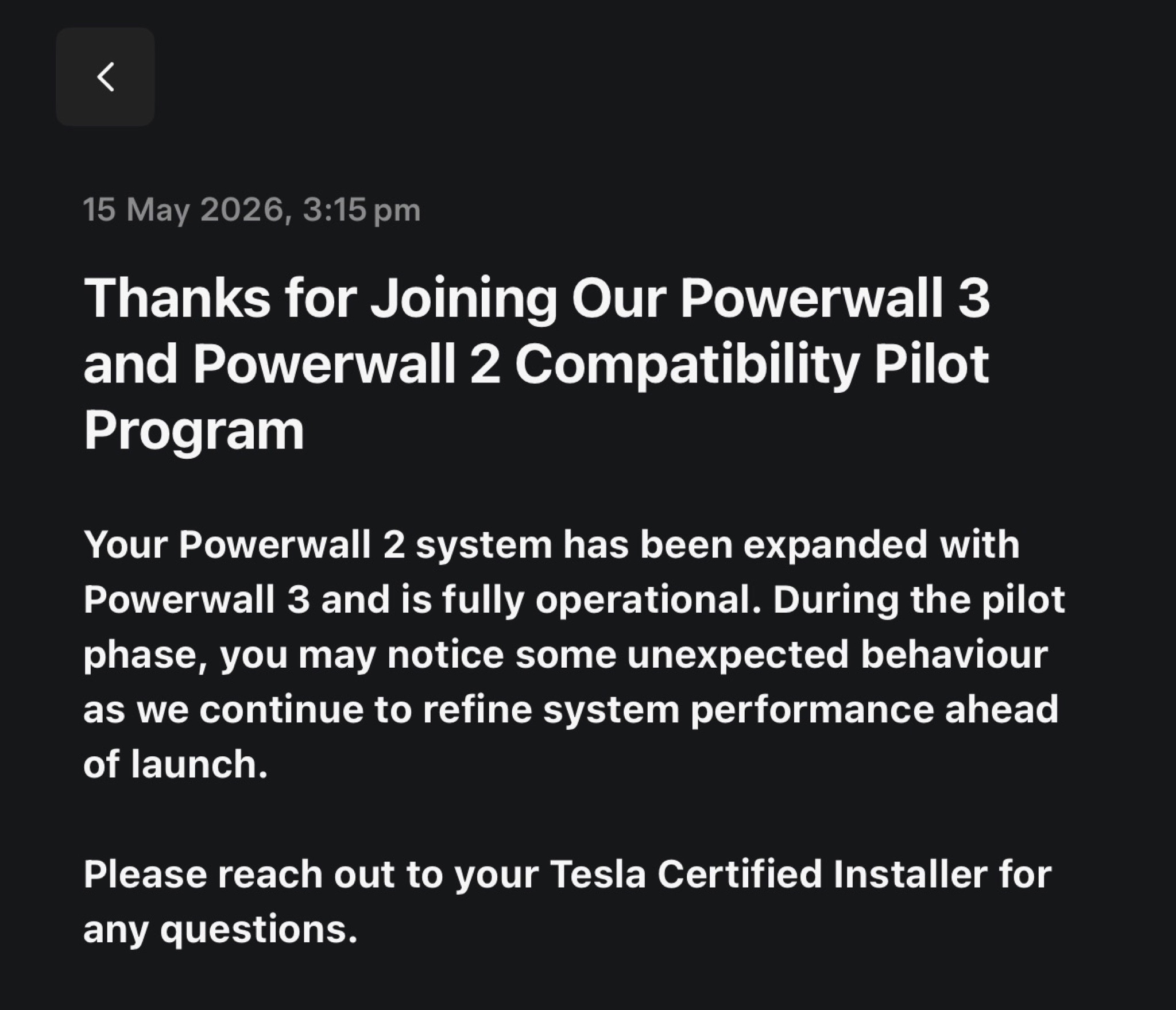
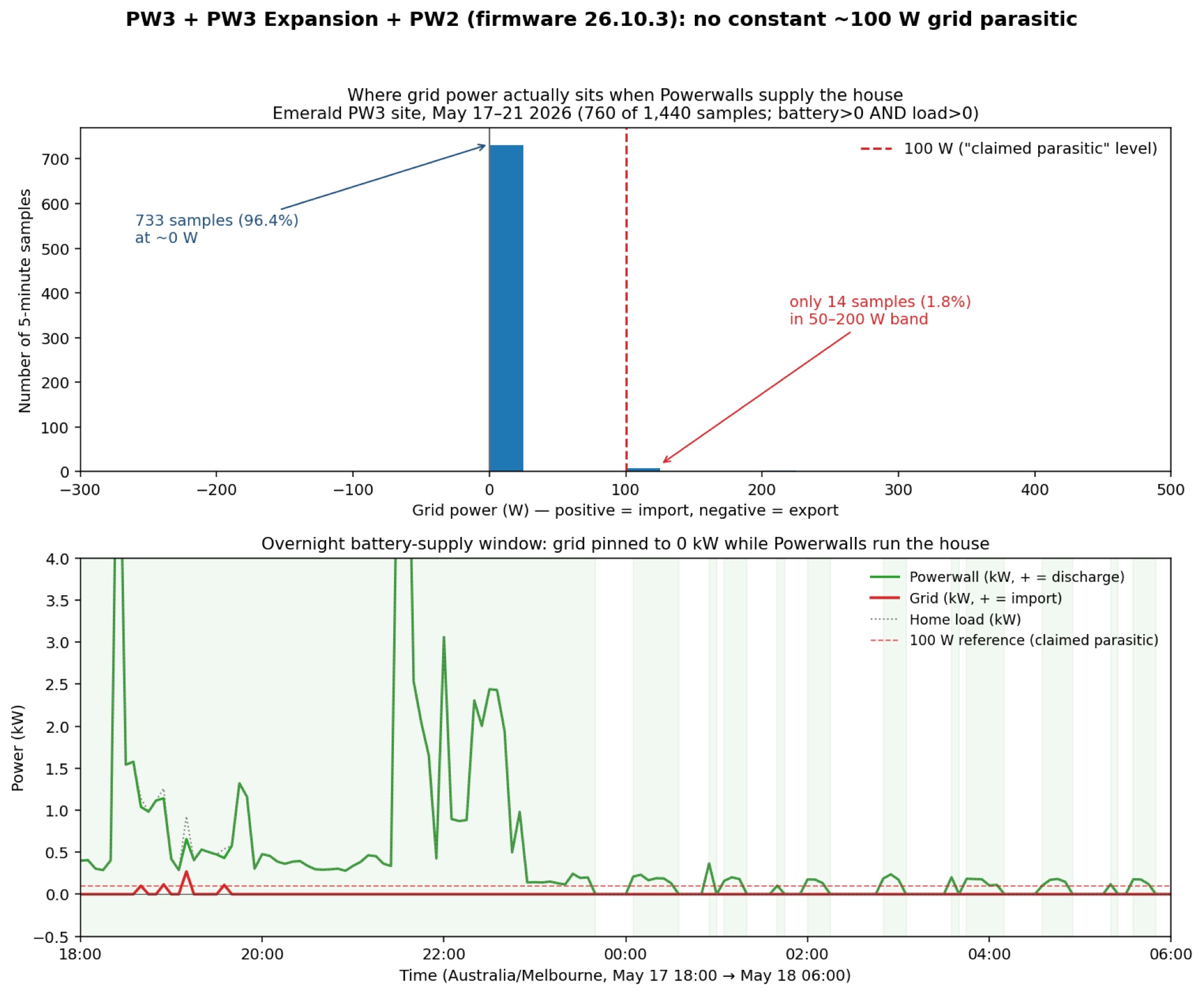
Short version: another Powerwall 3 owner heard our pilot firmware might be quietly leaking 100 watts to the grid, around the clock. I checked our own data — five days, every five minutes — and we're not seeing it.
Here's the rumour in his words:
"With the current beta they do see an issue where the GW is constantly drawing 100W from the grid even though the home is using battery. Tesla told them yes they are aware of the issues but will be addressed in the final release in July. Do you see that grid draw on yours?"
The "GW" is the Tesla Gateway — the small box on the wall between our batteries and the house that decides what flows where. The claim: on the current pilot firmware, it's constantly pulling about 100 watts from the grid (a tenth of a kettle, all day every day) even when the batteries are supposed to be running the house. That's roughly 12 kWh a month, or about $3 at our rate, silently bought from the grid for no good reason. Annoying rather than catastrophic, but absolutely worth knowing about before you sign up.
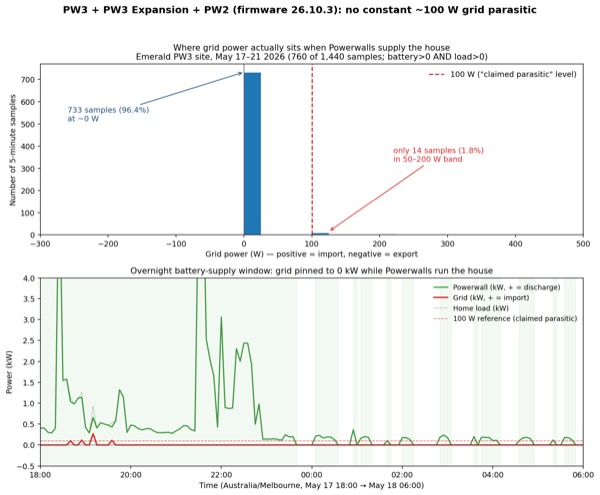
So, I pulled five days of our actual energy data (May 17–21, since the firmware fix landed on 14 May) and looked specifically at the minutes when the Powerwalls were running the house — 760 minutes in total. For 96% of those minutes, the grid line sat at exactly zero. Another 2% sat between 50 and 200 watts — right where a steady 100 W draw would pile up — but nowhere near often enough to fit a "constant" pattern. The only big grid number on any given day is the overnight window when we deliberately top the batteries up from cheap power; outside that, the meter is asleep.
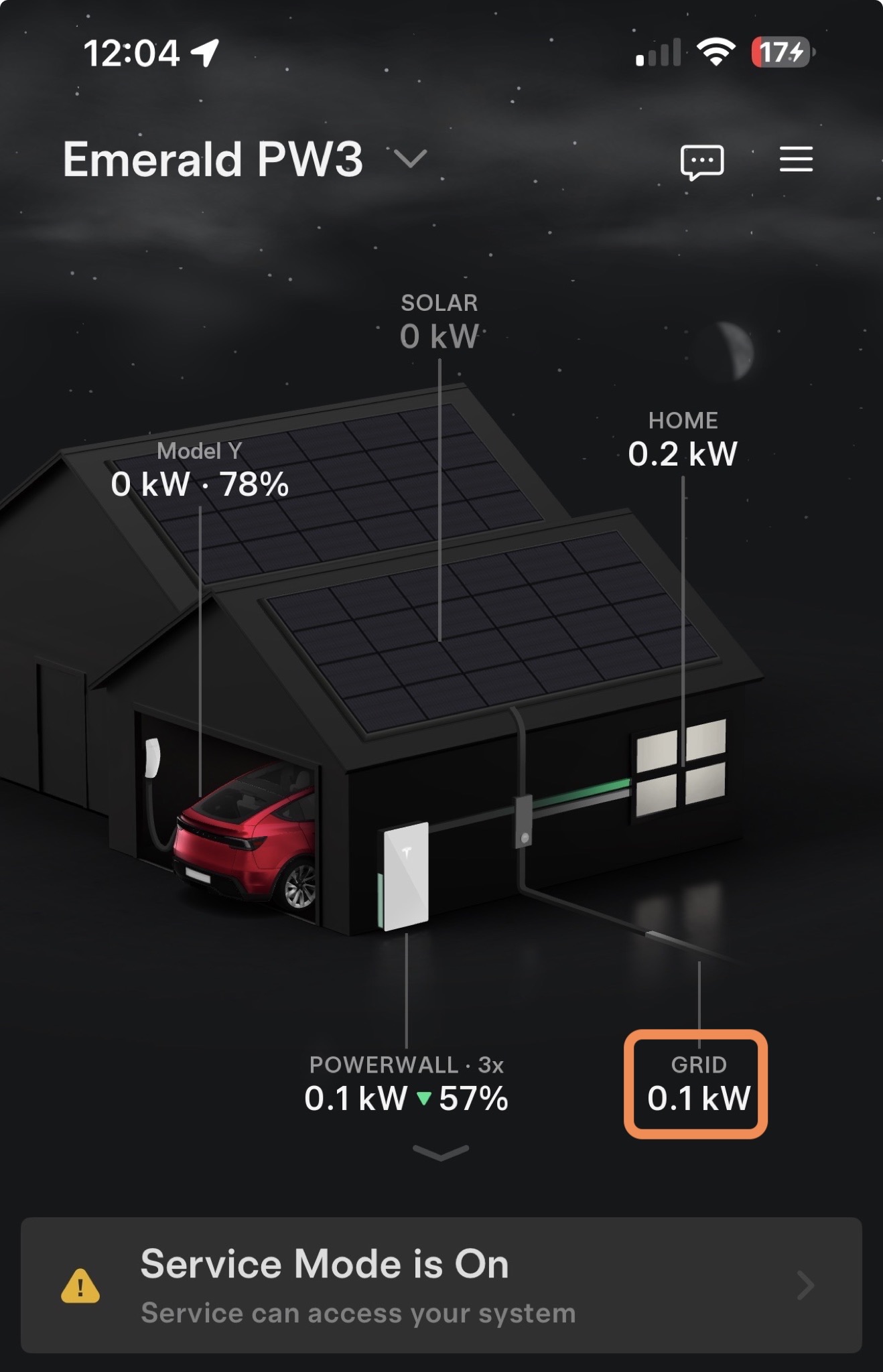
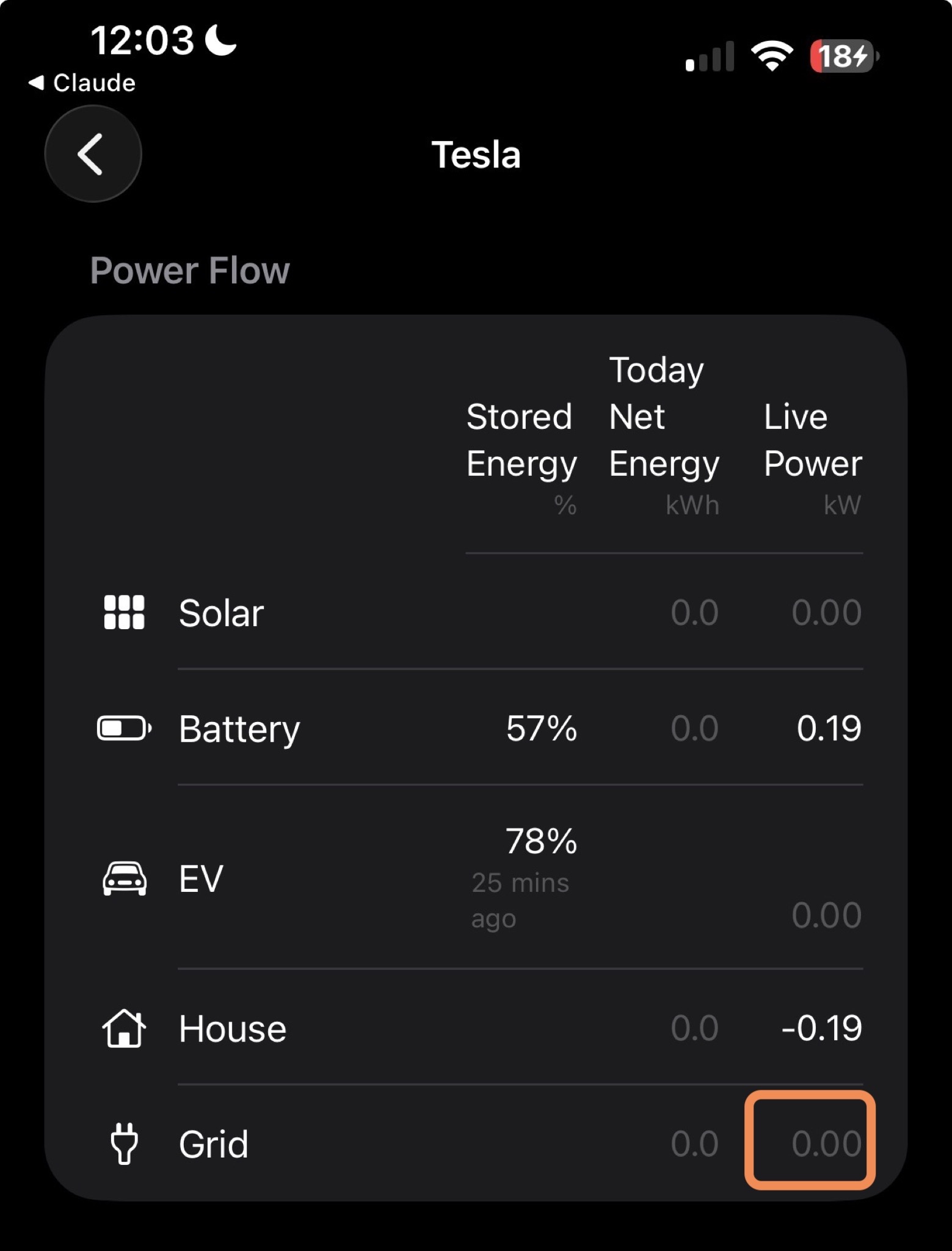
Now — fair pushback. The Tesla iOS app screenshots above show GRID 0.1 kW, not zero. That's exactly the rumour's 100 W, so naturally you'd think yes, here it is. Amber agrees, but Amber just relays Tesla's number.
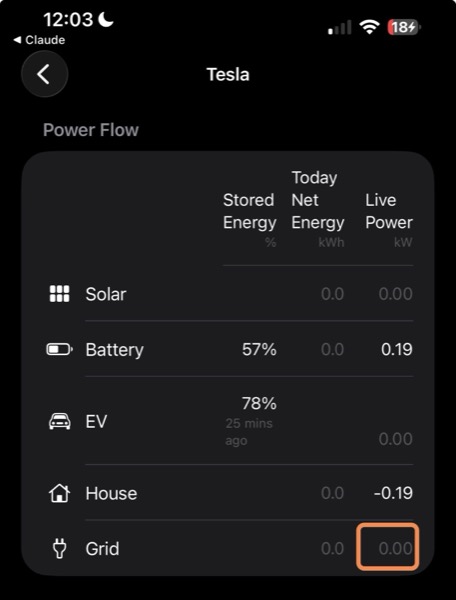
Here's the giveaway. The same Tesla API also feeds my own Power app, which I built to query our gear directly — and on its Tesla Live Power readout the Grid line is 0.00 kW to two decimals. Same data source, different rendering, no 0.1. Enphase Enlighten, which has its own meter on our install, also reads 0 kW. So the 0.1 kW you're seeing in the Tesla iOS app is iOS-side rounding from something small enough that two other systems looking at the same wires call it zero — not a continuous 100 W draw.
If you're also on the Tesla pilot — or watching your install go live in July — what does your grid line show overnight? And if you've got a second view of it (Enphase, an independent meter, a direct-API client), do the two agree?
Related Posts
- Part 4 — the pilot-program reveal that prompted this question Powerwall puzzle answered 22 May 2026
- Part 3 — the fix that worked but couldn't be explained at the time The Powerwall fix I can't explain 14 May 2026
- Part 2 — the May 7 beta-firmware reconnect that lasted two hours Tesla Powerwall 2 Compatibility Beta 7 May 2026
- Part 1 — install day for the Powerwall 3 and Expansion Two new Powerwall batteries, installed by lunchtime 13 Apr 2026
- Two days earlier — the moment that prompted me to pull this data It wasn't the grid. It was me. 21 May 2026
Report
Report
Report